THE ABSOLUTE MOST IMPORTANT ASPECT OF OIL PAINTING IS TO REMOVE THE MUCILAGE FROM THE UNREFINED FLAX OIL Also see the page: WASHING LINSEED OIL for additional information and photos |
TO DUPLICATE THE OLD MASTERS ' EXTRAORDINARY 'PAINT QUALITY', YOU MUST USE THE SAME SUPERIOR OIL THEY USED. THE OLD MASTERS' FAST DRYING OIL ALLOWS THE ELIMINATION OF SOLVENTS,RESINS,VARNISHES AND DRIERS SOME INSTRUCTORS EXPRESS THEIR VIEW THAT TO OIL PAINT WITHOUT ANY SOLVENTS, RESINS AND DRIERS AND VARNISHES, ALL ONE HAS TO DO IS USE THE PAINT RIGHT OUT OF THE TUBE. YES IT IS TRUE. ONE CAN AVOID ALL THOSE HAZARDOUS MATERIALS ...BY JUST NOT USING THEM. HOWEVER, THE METHOD OF JUST USING THE OIL PAINT RIGHT OUT OF THE TUBE IS VERY LIMITING AND WILL NOT ALLOW ONE TO ACHIEVE THE GREAT BEAUTY OF PAINT WE SEE IN THE OLD MASTERS' PAINTINGS. THIS IS THE RESULT OF USING OIL PAINT FROM THE TUBE WITHOUT ANY ADDITIV * Dries comparatively soft * Loss of color depth and luster * Poor blending * No Thixotropy * No Micro-Fine details * Extremely slow drying * Suede effect is disturbing FREDERIC TAUBES (1900-1981), DEFINED THE TERM "PAINT QUALITY" IN THE EARLY 20TH CENTURY. THE UNIQUE BEAUTY OF PAINT OF THE OLD MASTERS' PAINTINGS, IS IMMEDIATELY RECOGNIZED WHEN COMPARED TO THE POST INDUSTRIAL ERA OIL PAINTINGS. THIS PAGE AND THE PAGE TITLED: WASHING LINSEED OIL ARE DEDICATED TO RAISING AWARENESS OF THE SUPERIOR PROPERTIES AND IMPORTANCE OF THE OLD MASTERS" SUPERIOR OIL. |
 |
 |
 |
 |
 |
 |
 |
 |
 |
 |
 |
 |
 |
 |
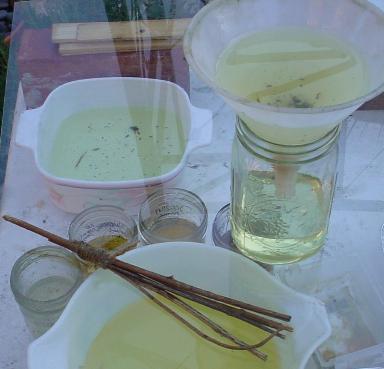
| CLEANSING THE UNREFINED FLAX OIL MODERN ALKALI REFINEMENT WITH USE OF CAUSTIC LYE CHEMICALS AND HIGH HEATING TEMPERATURES IS NOT AN ACCEPTABLE OIL for Fine Art Painting BECAUSE THE LYE SODIUM HYDROXIDE CHEMICALS AND HIGH HEAT CAUSE IRREPARABLE DAMAGE TO THE OIL. THE DVD DEMONSTRATES THE PSYLLIUM-ALCOHOL METHOD. It is based on Francisco Pacheco's 1649 use of Alcohol and Lavender flower buds method. I identified Psyllium Husk as a replacement for the Lavender flowers, thus , making it a SAFE method without any solvent. HOW CAN WE TELL IF THE OIL IS CLEAN THE CLARITY AND TRANSPARENCY OF THE OIL IS NOT A GOOD INDICATOR OF BEING MUCILAGE FREE. LOWERED TEMPERATURE CHANGES ,. CHANGES THE TRANSPARENCY, AS DOES MOISTURE CONDENSATION. ONE METHOD THAT IS RELIABLE IS USE OF THE ' WATER SEDIMENT TRAP', A TERM I COINED TO DESCRIBE THE RESTING OF OIL ON WATER. ANY AQUEOUS MATERIAL IS DRAWN BY THE POLARITY OF THE WATER. WITHOUT THE DRAW BY THE WATER...THE MUCILAGE REMAINS FULLY SUSPENDED IN THE OIL...AND IT IS INVISIBLE. YET. BOTH OIL AND WATER HAVE MASS AND WEIGHT. EXAMPLE; 300 POUNDS OF WATER, OR 300 POUNDS OF OIL, ARE HEAVY. SINCE OIL FLOATS ON WATER, THIS IS 300 POUNDS OF OIL SITTING ON AN IMMOVEABLE SUBSTANCE [ 300 POUNDS OF WATER]. THIS WEIGHT CAUSES SOME DEGREE OF EMULSIFICATION AT THE JUNCTION POINT. THIS EMULSIFICATION IS CLOUDY, OPAQUE. BUT, IF THE OIL HAS BEEN CLEANSED BY ANY OF THE PROCEDURES IN MY BOOK THE OPAQUE LINE IS ALMOST NON EXISTENT. COMPARING DIFFERENT OILS WILL SHOW DIFFERENT RESULTS. I HAVE READ THE ACADEMIC REPORT BY THE HIGHLY RESPECTED CONSERVATIONIST, LESLIE CARYLYLE , IN WHICH SHE STATES THAT IF THE OIL STANDS LONG ENOUGH.... ALL...THE MUCILAGE WILL SETTLE. I BELIEVE I CAN PROVE THAT IS SIMPLY NOT TRUE. I HAVE NOT YET READ HER REPORT OF TESTING AND COMPARISON OF OIL THAT WAS " WATER WASHED" BY AN OLD METHOD, AND COMPARED TO THE CONTROL OIL THAT WAS NOT WASHED. I UNDERSTAND HER RESULTS DETERMINED THAT THIS METHOD, WAS BASICALLY USELESS. THE NUMEROUS CLEANSING EFFORTS OF THE OLD MASTERS RESULTED FROM THEIR ORAL TRADITIONS AND KNOWLEDGE THEY LEARNED THAT EVEN 'STAND OIL" [ oil allowed to stand for extensive periods of time] WAS NOT CLEAN. I HAVE ALWAYS MAINTAINED THAT THE "WATER WASHING METHOD" OF THE OIL IS A WASTE OF TIME, ENERGY, AND OIL. I HOPE ONE DAY MS. CARLYLE WILL FOCUS HER HIGHLY RESPECTED TRAINING AND RESOURCES INTO THE STUDY OF THE MANY WAYS THE OIL CAN BE CLEANSED OF THE MUCILAGE. |
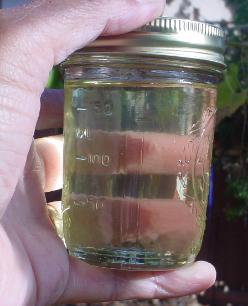
PHOTO RIGHT THE SUPERIOR LINSEED/ FLAX OIL OF THE OLD MASTERS EXAMPLE OF 30 DAY SUN THICKENED FLAX OIL: PROCESSED FROM UNREFINED FLAX OIL, CLEANSED OF MUCILAGE BY NON CAUSTIC METHODS, SUN AND AIR EXPOSED FOR 30 DAYS IN SUMMER SUN. ONCE YOU TRY THE SUPERIOR OIL I DESCRIBE ABOVE , YOU WILL KNOW THE DIFFERENCE. MY OPPOSITION TO HIGH PRICED OIL UNFORTUNATELY, SELLERS OF SUN THICKEN OIL CHARGE VERY HIGH PRICES, CHARGING ANYWHERE FROM $10 + PER OUNCE. I AM COMPLETELY IN OPPOSITION TO THAT PRACTICE. I FULLY UNDERSTAND THAT "CARING" FOR OIL FOR 30 DAYS, IS TIME CONSUMING AND TEDIOUS, BUT I BELIEVE THE SUPERIOR OIL CAN BE MASS PRODUCED AT REASONABLE PRICES. I ENCOURAGE ARTISTS TO BUY THEIR CALCIUM CARBONATE/ CHALK FROM CHAMPAGNE, DIRECTLY FROM www.kremer-pigmente.de THIS GERMAN COMPANY HAS DISTRIBUTORS WORLDWIDE. IN THE USA, THEY HAVE 2 OFFICES IN NEW YORK. I ENCOURAGE ARTISTS TO CLEANSE THEIR OWN UNREFINED FLAX OIL WITH THIS REMARKABLY EFFICENT AND EASY 'PSYLLIUM ALCOHOL" METHOD. THEN YOU WILL SEE HOW EASY AND INEXPENSIVELY IT IS TO MAKE YOUR OWN SUPERIOR OIL OF THE OLD MASTERS. |
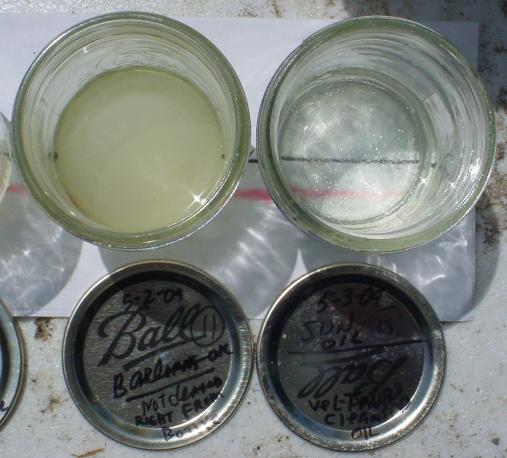
TESTING THE CLEANSED OIL FOR CLEANLINESS The use of the Water Sediment Test is a good indicator on whether the CLEANSED OIL oil contains mucilage. Care must be taken because the simple fact that two liquids, one on top the other, may just show a thin film of emulsification at the juncture point. And, the degree of mechanical filtration is another consideration, as a poor filtering will allow mucilage or other sediment to enter the oil. EXAMPLE: In using the Lavender flower, I found that the minute sized fuzz from the flower buttons can pass through the filter. The same for use of the Psyllium Husk. However, there is reason to believe that the Water Sediment Trap is a good indicator on whether the chosen cleansing method, did or did not remove the mucilage.. TRULY, only a science lab can measure the quantity of mucilage in oil, but we know the Old Masters did not have any of our modern instruments and some of them succeeded. I reject the notion that the cleansing of the oil was a complicated or time consuming process. In my opinion, the 'water washing' processes where oil is REPEATEDLY vigorously shaken with water , IS A WASTE OF TIME AND OIL. My book explains the reasons. These series of tests show the results of 1/4 inch of oil resting - NOT EVER MIXED OR SHAKEN TOGETHER- on 2 ounces of water, over several days. The results are interesting. The white paper resting beneath the jars has 2 lines. a solid black and a red. It turned out the red was not waterproof, and one morning we had a lot of DEW on the paper, causing the red to bleed. The photos speak for themselves. Continue to scroll down to see all the photos. |
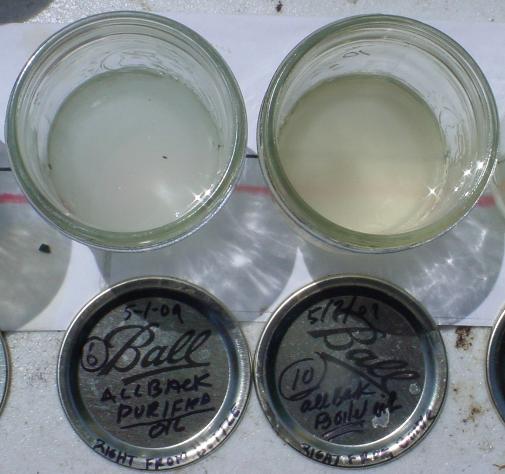
| ALLBACK SWEDISH OIL They produce 2 kinds: BOILED and PURIFIED My tests used the oil right from the container. #6 = ON YOUR LEFT; Their Purified Oil #10 = ON YOUR RIGHT: Their BOILED oil SEE THE REPORT BELOW EXPLAINING WHY I CANNOT RECOMMEND ALLBACK LINSEED OIL FOR FINE ART PAINTING |
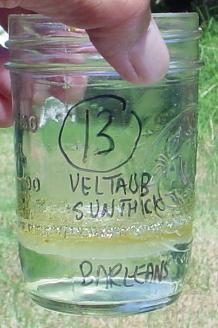
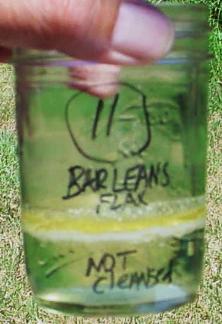
| BARLEANS UNREFINED FLAX OIL #11=On your left, is the UNCLEAN oil right out of the bottle. It is known to be full of mucilage. # 13=On your right: Barleans oil, previously cleansed by the VEL-TAUB method, then SUN THICKENED for 30 days. The oil is beginning to crystalize and dry HARD. It is pure colorless clear as it is drying on the water, as only 1/4 inch oil is resting on the water. |
SWEDISH ALLBACK LINSEED OIL = EXCELLENT FOR HOUSE PAINTING NOT RECOMMENDED FOR FINE ART OIL PAINTING BECAUSE THEY WILL NOT TELL HOW HOT THEY HEAT THEIR "PURIFIED LINSEED OIL Swedish , Allback linseed oil, is sold in the USA by ….http://www.solventfreepaint.com ... but manufactured and processed by the Allback company of Sweden. I have read their website carefully several times, and I have written to them for specific information. Swedish words translated into English, as in all language translations, lose some meaning. Example; Their website says that if linseed oil is not first purified, but is BOILED to a certain temperature, it will EXPLODE. ......Well, that’s not true. But, it will IGNITE. It is not that they are misleading us, just that the translation is weak. I was able to understand the basic information their website says about their oil by applying common sense and use of my experience. The one important question I have asked Allback, is this; ‘ What is the maximum temperature your PURIFIED oil…not your BOILED oil --- is heated to. This very important question is based on my research of scientific academic sources that states flax/linseed oil begins to decompose at 230-236 degrees centigrade. The allback company has never responded to my letters. The USA representative did respond after two letters, and would only say that the process is patented, and they will not divulge it. This reluctance to inform the public is not helpful to us artists. My patent in the USA is open to the public, so I do not understand the reluctance. PLEASE KEEP THE DECOMPOSITION TEMPERATURE IN MIND AS YOU READ THIS REPORT This information is from academic sources and is on my website: 200 Degrees Centigrade = The Old Masters use of a goose quill to indicate SAFE heating temperature 230-236 Degrees Centigrade = DECOMPOSITION BEGINS / Carbonization/ Reduced Lifespan 300 Degrees Centigrade = Modern Stand Oil - heated/ without Oxygen 300 Degrees Centigrade = Oil smokes and produces TOXIC Carbon Monoxide and Acrolein gas vapors 343 Degrees Centigrade + = Oil begins to BOIL 343 Degrees Centigrade + = Oil Ignites / Catches fire 380 - 425 Degrees Centigrade= Burnt Plate Oil made by modern testing Some websites recommend use of Burnt Plate Oil. BURNT PLATE OIL is a very decomposed oil meant for disposable Lithography. Its true name is ‘ Lithography oil”. Rembrandt's etching were made with Lithography Oil, and they are kept under wraps, covered, in the shade as much as possible. The Allback website states they process and sell two kinds of linseed oil. BOILED and PURIFIED. 1. ALLBACK'S " BOILED" linseed oil. Swedish Flax oil is undoubtedly one of the highest quality oil GROWN and HARVESTED in the world. But the processing of the RAW OIL determines the FINAL QUALITY for the needs of artists. This Allback oil is BOILED and they do not deny it. They in fact are very proud of it, as they should be. Because its high quality BOILED OIL is made for painting houses and fences and all manner of wooden objects , AND... they NEVER advertise it for fine art oil painting. Linseed/ flax oil begins to BOIL at 343 degrees centigrade. This is far above the safe temperature of 230-236 degrees centigrade at which time the oil begins decomposition. What does ’decomposition’ mean in terms of artists oil? This: For house painting, 50 years is an adequate life span, and no one expects more. Of course the house is blasted by rain, sleet, sun and snow. It’s a miracle it lasts 50 years. A Van Eyck painting left to those outrageous conditions would not fare any better. The key here is that by BOILING the oil, and causing its decomposition, its lifespan is severely compromised. But given that its service is - 50 years, it’s a moot point. I would bet my money that if the house was painted with Allback BOILED oil, and kept indoors next to the Van Eyck painting for 600 years, it would not come close to the state of preservation of the Van Eyck painting. CONCLUSION ON ALLBACK'S BOILED LINSEED OIL: : DO NOT use any BOILED linseed oil for fine art oil painting regardless on who makes it Science says it is severely decomposed with a shortened life span. 2 . ALLBACK'S " PURIFIED linseed oil". a. = The oil is pressed COLD. This is GOOD. Cold Pressed oil is great, but even gentle heat in pressing is allowable as this oil is very TOUGH. b. = Then it is stored and allowed to stand still. This is GOOD too , because this means it is allowed to settle the vegetable particulate caused by the pressing of the seeds. When freshly pressed it is FULL of husk, dirt, and other sediment. Gravity will allow this heavier particulate to settle. c. = Then the top clear oil is siphoned off. This is GOOD. Because now the clear oil is easier to be further processed. Allback, just as the Old Masters, learned something very important. NO AMOUNT of gravity will remove the MUCILAGE. Mucilage is a very complex ingredient. Nature placed it inside the seed for reasons of nurturing the rebirth of the seed when it is sown into the ground. Mucilage is INVISIBLE to the naked human eye. If you looked at a WARM glass of that clear bright top oil siphoned off the top, it would sparkle with great beauty of transparency. BUT, it is filled with MUCILAGE. The Old Masters learned of this over centuries of oral tradition. Mucilage will ferment, decompose, and turn the oil paint made with it, BROWN and DARK, if not removed. The Old Masters knew this and tried everything under the sun to remove it. Some succeeded and the evidence is their 600 year old oil paintings with colors that remain jewel-like. After the Old Masters’ demise, 19th century scholars like Eastlake, followed by many generations of other artists, all tried their hand at cleansing the oil. Finally, industry cleansed it with caustic lye chemicals, but ruined the oil’s durability, and properties, in the processing. d. = Then, the Allback website says, the oil is ‘heated gently’ to remove the PROTEIN while it is exposed to OXYGEN. This oxygen procedure is not explained. But, I can add my personal knowledge here. Since I have worked with the cleansing of the oil for 4 years now. The goal is to remove the Mucilage and by heating the oil, the heat thins the oil. This certainly helps but it is not enough. Exposure to oxygen, especially if HEAT is being applied, is very necessary, or, the steam water vapors remain in the oil, causing and perpetuating moisture retention and slow drying. Since Allback wants a faster drying oil, oxygen is part of the process. The Old Masters knew this too, that the oil must be left uncovered as it is being sun thickened. It is interesting that Allback calls the MUCILAGE, by the term, PROTEIN. Some call it BREAK, and, others call it the ‘FOOTS”. Regardless, the Allback website says it treats the oil with several gentle heatings and does their very best to remove ALL the PROTEIN, as they call it. Only then, do they call this oil PURIFIED. CONCLUSION ON ALLBACK'S PURIFIED LINSEED OIL. : Since I know the oil begins decomposition at 230 degrees centigrade, If I knew the temperature the Allback PURIFIED oil is heated to, I could make an informed accurate decision. Llacking that, I cannot endorse Allback oil for fine art oil painting. Some artists are either unaware of the decomposition temperature of oil or do not care. |
CAUTION : ANY ADDED ANTIOXIDANT WILL SLOW THE DRYING: COMMON ANTI-OXIDANTS ARE: VITAMIN E and C, TOCOPHEROLS , POLYPHEROLS, ROSEMARY. Do not buy HIGHEST LIGNANS OIL , nor OIL MADE FOR PETS MODERN COLD PRESSED is really not COLD pressed because powerful Hydraulic presses crush the seeds. This modern equipment causes heating. Barleans has told me no additional heat is applied to the oil, but that the presses heat up, and this causes the oil to heat up about 110 degrees F.. This is acceptable because it is far under the safe heating temperature of where the oil decomposes at 230 degrees C. My tests show that sun thickening the oil in moderate sunny San Diego California, 5 miles from the ocean, might have a temperature of 80degrees F., but the oil in the white opaque container is about 125 degrees F. This sun exposure over 30 days is not harmful to the oil. Artists in hot Texas tell me 15 days is all they need to sun their oil. COLD PRESSED Old Holland company from the Netherlands states their oil is pressed by windmill power, as in the olden days. Their oil is excellent, but very expensive. Some may wish to use only it. I settle for Barleans. : Read the label. Since food grade Flax oil is REALLY being processed for human health, you need to READ the label carefully. AVOID the oils that say they contain tocopherols, polypherols, Vitamins E and C or Rosemary. ANTIOXIDANTS slow down the drying of oil. ALSO AVOID any oils with flavorings or any other ADDITIVES. |
| CLEANSED OIL TO THE RIGHT: IT WILL BE BRIGHT YELLOW AND FULLY TRANSPARENT. THIS NON-SUNNED OIL IS STILL-A SLOW DRYING OIL. Once the oil is cleansed of its damaging mucilage, it can be used for several important tasks in the 'Calcite Sun Oil / Emulsions' method of oil painting. 1. It is ready to be sun thickened .Sun thickening takes 20-30 days depending on geographical area and season. This process produces the VERY FINEST OIL or oil painting. FAR SUPERIOR to walnut, poppy, or any other oils used by some. This is the PREMIER oil used by the greatest European Old Masters, the one spoken of by the Renaissance master, Cennino Cennini. 2. Before the oil is sun thickened, it is limpid and yellow. It is used to make the simple ' Non Viscous' Emulsion" described in my book. The Non Viscous Emulsion serves important tasks not offered by the Viscous Emulsion. If not applied correctly, the Emulsions will fail. 3. Once this oil is Sun thickened, it is viscous and bleached. It is then used to make the' Viscous Emulsion". Both emulsions are made within 30 seconds if the glair is available. Glair takes 5 minutes to make. Both EMULSIONS are crucial to oil painting without solvents, resins and varnishes or driers. 4. NOTE: USE low cost alkali refined linseed oil for cleaning your brushes, hands, palette and grinding table. |
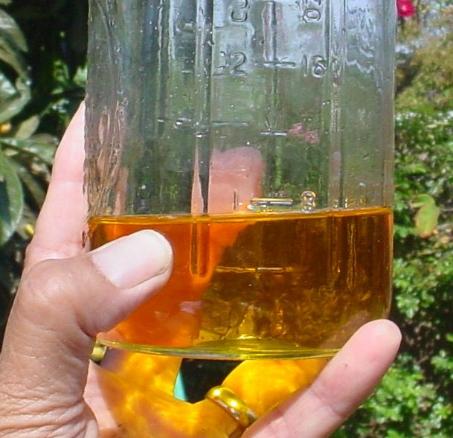
SUN THICKENING YOUR OIL IS EASY OIL can also be ' thickened" by using an electric hotplate in the winter--but the oil remains yellow. Keep the temperature very low, under 130 degrees Fahrenheit. The oil begins to decompose at 230 degrees Centigrade. Care must be taken for fire hazard and burns. Artificial heat should be done outdoors and children should be protected. THE PHOTO TO THE RIGHT, SHOWS THE OIL ONCE IT HAS BEEN SUN THICKENED FOR 30 DAYS IN HOT SUMMER SUN. = BUGS AND DIRT GET INTO THE OIL, BUT ARE EASILY FILTERED OUT. THE SUN EVAPORATES MOISTURE NATURAL TO THE OIL CREATING A FAST DRYING OIL AND IT BLEACHES THE OIL. THE EXPOSURE TO THE SUN RAYS, AIR AND HEAT CAUSES THE OIL TO BECOME VISCOUS. ALL OF THESE CONDITIONS CREATE AN OIL THAT WILL DRY WITHIN 30 HOURS OR LESS WHEN USED IN PAINT IF PAINTED THIBNLY. TUBE PAINT IS MADE WITH SLOW DRYING OIL AND THIS SLIGHTLY SLOWS THE DRYING. HAND GROUND PAINTS ARE THE FASTEST TO DRY. THE OIL MUST BE STIRRED DAILY FOR 1 MINUTE, BUT IN EXTREMELY HOT WEATHER, 2X A DAY. STIR BRISKLY TO INTRODUCE OXYGEN INTO THE OIL. |
all images and text on this website are copyright 2009 Louis R. Velasquez , all rights reserved
|
|
|
|
|
|
|
|
|
|
|
|
|
|
|
|
|
|
|
|
|
|
|
|
|
|
|
|
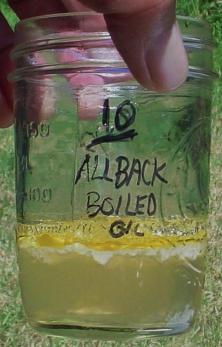
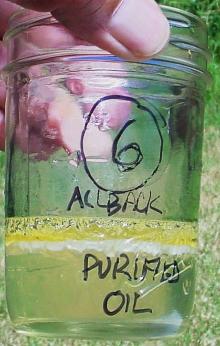
ADDITIONAL TESTS The tests were started on 5/1/09 and 5/2/09 ON 6/23/09 I placed all samples in a box without any light. On 9/16/09, I removed the samples and took photos of each. This almost 3 month standing in darkness produced the following results. #10= The ALLBACK BOILED LINSEED OIL fared the worst of all 6 samples. A thick white concentration sits on the water under the oil. #6 = The ALLBACK PURIFIED LINSEED OIL, recommended by some websites, fared almost as bad as the PURE white matter rests on the water. #13 = The Barleans Unrefined Food Grade Flax oil That had been cleansed prior by the VEL-TAUB method then sun thickened 30 days , shows an extremely thin film resting on the water. This is due to contact as described above. # 11 = The Barleans Unrefined Food grade Flax Oil that has not been cleansed of its mucilage shows a thick white matter settling on the water |
| WARNING DO NOT BE FOOLED MAJOR BRANDS SELL LINSEED OIL WITH THE LABEL= "SUN THICKENED LINSEED OIL" --MAKING IT APPEAR THEY ARE LIKE THE OLD MASTERS' OIL. THESE MODERN INDUSTRIAL OILS ARE SLOW DRYING OILS . --THE VERY FINE PRINT ON THE BACK LABEL DISCLOSES THAT THE OIL IS ALKALI REFINED LINSEED OIL |
THE PSYLLIUM-ALCOHOL METHOD OF CLEANSING THE UNREFINED FLAX OIL IS DEMONSTRATED IN THE NEW DVD, "OIL PAINTING WITH CALCITE SUN OIL " Live film demonstrates how to cleanse your oil, easily and efficiently. IT TAKES TEN DAYS TO CLEANSE THE OIL SEE MY NEW BOOK described on my main page IT CONTAINS the new AIR PUMP OIL and my newest method for cleansing the oil "THE CSO-GEL METHOD" This new method will cleanse the oil in one day |
|
|
|
|
|
|
|
|
|
|
|
|
|
|

THE FRESHLY CLEANSED OIL IS SLOW DRYING. IT
MUST BE SUN THICKENED TO BLEACH IT AND TO
EVAPORATE THE INHERENT MOISTURE SO THE OIL
CAN BECOME VISCOUS AND FAST DRYING
MUST BE SUN THICKENED TO BLEACH IT AND TO
EVAPORATE THE INHERENT MOISTURE SO THE OIL
CAN BECOME VISCOUS AND FAST DRYING
| SWEDISH LINSEED OIL PROCESSED FOR PAINTING HOUSES IS NOT RECOMMENDED FOR FINE ART OIL PAINTING Linseed Oil is FLAX OIL. There are NO ‘LIN” seeds in nature. There is a strong world wide demand for Linseed Oil, and the flax plants are grown around the globe. The oil processed for INDUSTRIAL uses is labeled, “LINSEED” oil. The same oil, but processed for human consumption is labeled, “FLAX” oil. The oil the Old Masters used was raw, unrefined, cold pressed FLAX oil. After it was freshly pressed, it was full of mucilage and of vegetable particulate caused by the crushing of the seeds. This particulate is pulverized seed husks, dirt and other matter. If the oil is left to STAND STILL ( the original use of the word STAND OIL), much but not all of the particulate drops to the bottom. However, no matter how long the oil is left to stand, gravity will not drop all the mucilage. The Old masters found this out and tried everything to remove the mucilage. I have pasted some parts from the website of the Swedish company, ‘Allback’. Here is their website, and I encourage you to read it. These snips of their site are on the FAQ section. Today, different words are used to describe the MUCILAGE. Some call it a ‘ BREAK”, and others like Allback Co. call it PROTEIN. There site speaks for itself. Their product is processed oil made for painting houses, not for FINE ART painting. THE FOLLOWING IS FROM THE ALLBACK WEBSITE http://www.solventfreepaint.com/faq.htm#lead Organic Linseed Paint from Allback, Sweden. Allback Purified Organic Linseed Oil The raw linseed oil is purified and refined through the addition of oxygen to produce boiled or "cooked" linseed oil. This process eliminates protein and improves aspects such as the drying time, shine and purity. Uses: 1) Thinning the linseed paint. 2) Maintenance of old linseed painted surfaces. 3) May be used as a first coat on extremely dried out wood. 4) Add a few ounces of paint to the boiled linseed oil to create a stain. 5) Excellent for long term storage of paint brushes. Purified linseed oil is used as a binding agent in Allback linseed oil paints. The raw oil is used for the glazing putty. This paint … lasts 50 years on the exterior of a building. Maintain every 5- 10 years with the Purified Organic Boiled Linseed Oil or the linseed oil wax. What is "boiled" linseed oil and linseed oil paint? … Allback linseed oil and linseed oil paint is made from cold pressed flax seed grown in a northern, colder climate. ….The cold pressed oil contains about 30% protein that is removed in a cleaning process. The removal of the protein is crucial for preventing mold and mildew. When the protein is removed, the oil can be boiled and sterilized. This is contrary to the linseed oil products available in most paint stores. These products are NOT actually boiled even though they are labeled "boiled". Linseed oil that has the protein cannot be boiled, it is technically impossible (the oil will become explosive when heated.) .If the linseed oil is not boiled and sterilized it does not dry. Substantial amounts of chemical driers have to then be added to these "unclean" linseed oil products. The Allback linseed oil and paint is completely free from any chemical driers and dries naturally within a few days. …. Will the linseed white paint yellow? Linseed oil paint of good quality yellows very little and only in the absence of daylight (like under a flowerpot.) The yellow tint disappears if the patch is exposed to daylight. ….. How does linseed oil paint work? The linseed oil in the paint gradually oxidizes with the air. After five to ten years it fades, hence why we encourage the application of a layer of warmed, cleaned, boiled linseed oil. The capillary effect of the linseed oil in the paint will continuously penetrate into the wood and prevent moisture from entering. This will maintain the wood perfectly How does Allback clean their linseed oil? After the flax seed have been cold pressed, the oil is heavily stirred and then stored. The protein in the oil will sink to the bottom after approximately 4 weeks. The oil is then pumped off the surface. This process is repeated until the oil is cleaned. Low heat is used to speed up the separation of the oil and the protein. It is very important for the quality of the paint to remove as much protein as possible. The linseed oil can then be boiled and sterilized. When the oil is sterilized, it dries and the need for any added chemicals is eliminated. What else is linseed paint good for? Linseed paint is also excellent for rust proofing anything from steel, house hardware to automobiles……. |
UPDATE ON FRANCISCO PACHECO's 1649 METHOD REMOVING THE MUCILAGE FROM THE UNREFINED FLAX OIL NOTE: Francisco Pacheco was the teacher of Spain's great painter, Diego Velazquez. In Feb. 2008 I was in Madrid and bought the modern 700 page reprint of Pacheco's 1649 book, I have conducted many tests on the instructions he gave us to follow. My books give results of all the experiments I have made to date regarding that.. As I have clearly stated before: Since my site is dedicated to NO SOLVENTS, it is ONLY because of the important Historical value of Pacheco's method that I include it. His method uses the Lavender flower buds and the processing leaves SPIKE SOLVENT in the oil. Therefore, if you use the PACHECO METHOD, be aware of the solvent. I also have clearly stated that Pacheco's method inspired me to create the PSYLLIUM HUSK-ALCOHOL METHOD, which uses the same principle but WITHOUT THE LAVENDER- creating a fine oil without any SPIKE SOLVENT. I OFFER TODAY'S PAINTERS A MODIFICATION: IT IS TITLED: The CSO-PACHECO METHOD. - READ THE FULL DIRECTIONS IN MY NEW BOOK titled "OIL PAINTING LESSONS WITH REMBRANDT AND CALCITE SUN OIL" |
| JUNE 14, 2012 THE AIR PUMP METHOD: THICKENING AND BLEACHING THE OIL WITH AN AQUARIUM AIR PUMP - -AN AMAZING NEW METHOD - THE OIL BLEACHES and THICKENS IN 15 DAYS BUT FIRST YOU MUST CLEANSE THE OIL- THIS TAKES 10- DAYS The Old Masters' traditional Sun Thickening methods takes approximately 40 to 60 days BACKGROUND INFO: In the INDUSTRY of linseed oil production in the early 20th century-- chemists created BLOWN OIL. This BLOWN OIL was made by blowing a constant stream of HOT AIR through the oil. This thickened the oil quickly and made it dry faster. BUT FREDERIC TAUBES, [1900-1981] the Technical advisor for American Artist Magazine, and a knowledgeable painter, said this BLOWN OIL would wrinkle badly when used in painting and would YELLOW greatly over time. ALSO: INDUSTRY USED only their currently available denuded decomposed Alkali refined caustic chemical, lye treated linseed oil, whereas we DO NOT! This is most certainly an important point. SEE THE YOUTUBE VIDEO ON THE NEW " AIR PUMP OIL" - This extraordinary oil dries within 14 hours [ in summer heat] when mixed into CSo and tube oil paints. Handground paints dry in 5 hours. CLICK TO SEE THE VIDEO: HERE |
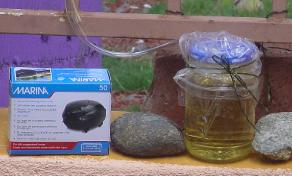
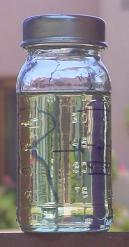
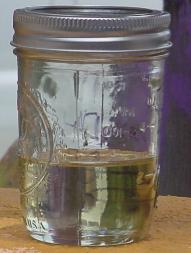
AFTER 5 DAYS : The photo
to your right shows a
sample- read more on my
main page--scroll down
This sample dries in under
48 hours- it is still not
viscous enough.
THIS SLOW DRYING OIL
WOULD BE GOOD FOR
GRINDING POWDERS IF
ONE WISHED TO HAND
GRIND
to your right shows a
sample- read more on my
main page--scroll down
This sample dries in under
48 hours- it is still not
viscous enough.
THIS SLOW DRYING OIL
WOULD BE GOOD FOR
GRINDING POWDERS IF
ONE WISHED TO HAND
GRIND
AFTER TEN
DAYS= The
photo to your
right shows
an oil that is
even more
viscous and
faster drying--
DRYING
within 5 to 14
hours
when used
to make CSO
DAYS= The
photo to your
right shows
an oil that is
even more
viscous and
faster drying--
DRYING
within 5 to 14
hours
when used
to make CSO
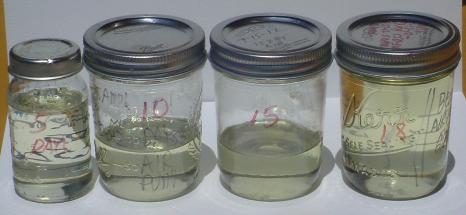
7/18/2012=
4 jars of the oil- sample at
5 days- 10, 15, and 18
days.
The oils were mixed with
chalk to make the CSO
then mixed with tube oil
paint --- the 10 to 18 day
oil -- dried within 5 to
under 14 hours.
4 jars of the oil- sample at
5 days- 10, 15, and 18
days.
The oils were mixed with
chalk to make the CSO
then mixed with tube oil
paint --- the 10 to 18 day
oil -- dried within 5 to
under 14 hours.
| FACTS ON THE EXTRAORDINARY AIR PUMP OIL |
|
|
|
|
|
|
|
|
|
|
|
|
|
|